

Original article: Shear Elasticity Analysis of Supraball
On December 29, 2025, our original article on elastic analysis of supraparticle assemblies, submitted to Ultrasonics by Elsevier, was published. This novel technique non-invasively evaluates the transverse wave velocity (which does not propagate in liquid but is the kernel of solid elasticity) and shear elasticity of particle assemblies, using longitudinal ultrasonic waves propagating through water!
Supraball or supraparticle is a “microparticle” formed by the assembly of “small particles,” essentially a particle cluster (Figure 1a). Compared to a single spherical particle (Figure 1b), its larger specific surface area enables significant functional improvements over uniform microparticles, such as enhanced electrical conductivity and improved enzyme or catalyst loading. While it appears promising as a drug delivery carrier, it would be problematic if this SB were easily broken. So, how can we determine the stiffness and durability of these SBs?
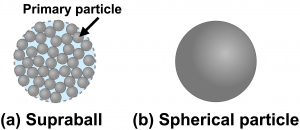
Fig. 1 (a) Schematic of (a) supraball or supraparticle and (b) spherical particle.
Methods for evaluating particle elasticity include indentation testing and atomic force microscopy (Figure 2). The principle involves locating a particle, pressing it in, and measuring its deformation to determine its stiffness. However, this requires locating a single particle under a microscope, and since particles are extremely brittle, most measurements were limited to destructive testing. Furthermore, even if a single particle is measured, sample stiffness generally has a distribution. Moreover, locating and measuring each particle individually is an extremely laborious and time-consuming operation. So, is there no method that can measure thousands or tens of thousands of particles at once, in a short time, and easily calculate elastic modulus information without destroying them?

Fig. 2 Schematic illustrations of indentation measurement (left) and atomic force microscopy (right)
We have developed a unique technology utilizing ultrasonic waves. When megahertz-frequency ultrasonic pulses are applied to a suspension containing micro-particles, scattering from the particles can be observed (Figure 3).
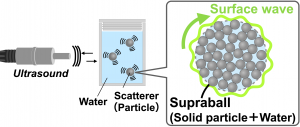
Fig. 3 Schematic of ultrasonic spectroscopy
Using technology to analyze these weak scattered waves, we determine particle stiffness in just a few seconds. While conventional methods focused on particle sizing to determine particle size, we developed this new stiffness analysis method by recognizing that the ultrasonic contrast stems from differences in elastic modulus. Technically, it utilizes resonance phenomena between particles and ultrasonic waves. To be more specific, when ultrasonic waves are incident on micro-particles, “surface waves” propagate around the particle surface. By carefully selecting the relationship between the ultrasonic vibration frequency and particle size, a strong signal called resonance is emitted according to the particle stiffness. This allows quantitative determination of particle stiffness directly from the suspension without drying it into powder (Figure 4).
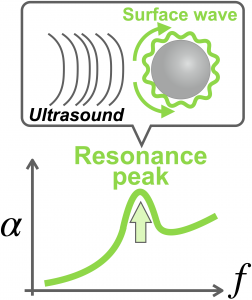
Fig. 4 Relationship between frequency peaks in ultrasonic attenuation spectra and surface waves.
This technology is applicable not only to uniform spherical particles but also to advanced particle assemblies like supraparticles. This research compares the ultrasonic method with the indentation method and discusses how to obtain hard supraparticles and how their stiffness is determined.